
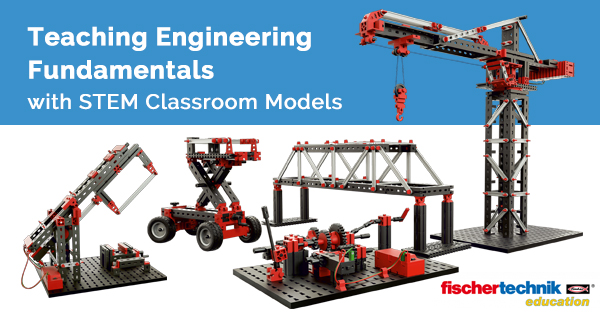
Quick Summary: The Mechanics 2.0 Set from fischertechnik Education is a comprehensive STEM learning kit designed to teach fundamental engineering concepts in the classroom. With over 30 interactive, hands-on models, students learn concepts such as gear systems, motion, and structure while gaining practical experience in basic mechanical engineering principles. Whether you’re a middle school science teacher, a high school STEM coordinator, or a college engineering instructor, the kit adapts to a wide range of curriculum needs and supports classroom instruction.
Why Teach Engineering Fundamentals with Hands-On STEM Models?
 Construction and engineering fundamentals such as mechanics, statics, dynamics, gears, and motion are essential for building future-ready STEM skills. Yet, textbooks often leave students struggling to visualize how these systems work. The Mechanics 2.0 Set from fischertechnik Education solves this by providing hands-on engineering models that let students actively explore mechanics through a variety of projects.
Teachers can use the kit to:
- Reinforce key STEM curriculum topics.
- Engage students through kinesthetic learning activities.
- Prepare students with construction and engineering basics for future STEM pathways.
Teaching Engineering Fundamentals in the Classroom
The set connects construction and engineering fundamentals to real-world applications. Students will explore:
- Gear Systems: Build and test gearboxes, planetary gears, and differentials.
- Motion and Structure in STEM: Understand how bridges, cranes, and machines transfer force.
- Statics & Dynamics: Learn how forces act on structures and create stability.
- Engineering Design: Apply mechanical engineering principles to construct strong and efficient systems.
These lessons encourage teamwork, problem-solving, and curiosity while making mechanics and statics fun and memorable for students.
Benefits for Educators
Teachers report that students are more engaged when STEM classroom activities are hands-on. Mechanics 2.0 is:
- Aligned with Curriculum Standards: Covers mechanics, motion, gears, and dynamics.
- Flexible: Works for guided lessons, independent learning, or group projects.
- Practical: Connects theory to real-world engineering applications.
What Teachers Are Saying:
“The kits come with detailed teacher support materials, making it easy to integrate into lessons. All materials are aligned with curricula and include tasks with solutions.” – Lola Gomez, Teacher
What’s Inside the fischertechnik Mechanics 2.0 STEM Education Kit
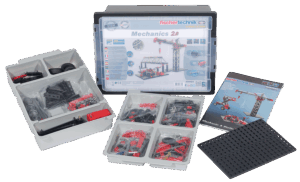
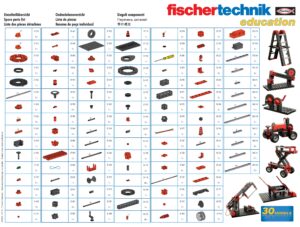 Each Mechanics 2.0 kit includes:
- 500+ parts for 30 different models (bridges, cranes, vehicles, gearboxes, and more).
- Mini motor, switch, and battery tray (requires 9V battery, not included).
- 134-page construction booklet with detailed instructions.
- Teacher resources, including lesson plans, problem sets with solutions, and downloadable activities at the fischertechnik eLearning portal.
This makes it an ideal STEM education kit for teaching engineering fundamentals in the classroom.
Frequently Asked Questions
Who is the Mechanics 2.0 set designed for?
It’s ideal for secondary schools, vocational training programs, and introductory college engineering courses.
How many students can work with one set?
One kit supports 2–4 students, making it perfect for STEM classroom activities and group collaboration.
What engineering concepts does the fischertechnik Mechanics 2.0 set cover?
Students learn about mechanics, statics, dynamics, motion, and gear systems, all core engineering fundamentals.
Do I need an engineering background to use this in my classroom?
No. The kit includes teaching materials and lesson guides with ready-to-use activities and solutions.
Can students use it independently?
Yes. The set works for both supervised lessons and independent exploration, giving teachers flexibility.
How does the Mechanics 2.0 kit connect with STEM curriculum standards?
The set covers key areas of construction and engineering fundamentals, including mechanics, statics, dynamics, and gear systems. The concepts align closely with common STEM curriculum topics, giving teachers flexibility to integrate the kit into their existing lesson plans.
What skills do students develop when using the Mechanics 2.0 set?
Students build problem-solving, critical thinking, and teamwork skills while applying engineering fundamentals and basic mechanical engineering principles.
Final Thoughts
The fischertechnik Mechanics 2.0 Set transforms how educators teach engineering fundamentals. By combining hands-on models with clear teaching resources, this STEM education kit makes abstract concepts like gears, motion, and structure accessible and exciting. Whether you’re teaching basic construction and mechanical engineering principles or creating STEM classroom activities that inspire curiosity Mechanics 2.0 is the perfect bridge between theory and practice.
Ready to bring construction and engineering fundamentals to life in your classroom?👉 Explore the Mechanics 2.0 STEM Education Kit today.
Share this Post